Introduction
Across the United States, a renewed wave of book challenges and bans has increasingly targeted young adult (YA) literature, particularly texts that explore race, gender identity, sexuality, mental health, and civic resistance. While debates over censorship in education are not new, the current scale, coordination, and politicization of these challenges have created urgent consequences for educators, librarians, and students. In many school and library settings, decisions about whether a book remains accessible are made under pressure, with limited time, unclear policies, and heightened community scrutiny. As a result, texts are often removed not because of a lack of educational or artistic merit, but because educators and advocates lack shared, formalized tools to articulate a book’s value within institutional review processes.
My project responds to that gap by examining the creation of formal, research-based book rationales as a practical and powerful form of advocacy for intellectual freedom. Developed and supported by the National Council of Teachers of English (NCTE), book rationales are structured justifications that articulate a text’s literary value, curricular relevance, and pedagogical use, which educators and librarians increasingly use to defend challenged materials. Through NCTE’s Intellectual Freedom Center, NCTE members can access a national database designed to support both instructional planning and the defense of challenged texts. When aligned with educational standards and grounded in research, rationales help shift conversations about censorship away from moral panic and toward instructional purpose, student learning outcomes, and educational equity.
Research suggests that the expectation for educators to defend their instructional text choices, often with limited time and institutional support, has increased their vulnerability to self-censorship. Jerasa et al. describe how teachers and librarians increasingly act as “literacy sponsors,” whose access decisions are shaped by fear of backlash, administrative uncertainty, and community surveillance, often resulting in the quiet exclusion of contested texts before formal challenges occur (65–66). This is reinforced by empirical research. Tudor et al. found that self-censorship is often not expressed through formal removal, but through the quiet absence of controversial books in school collections, particularly those involving LGBTQIA+ identities. In their study of 90 Texas public high school libraries, books with transgender or LGBTQIA+ content were significantly less likely to appear on shelves, suggesting that access is often restricted before a challenge even occurs (2). This climate reinforces the necessity of formal documentation that supports professional judgment and protects access to diverse literature.
The purpose of this project was to document the development of three formal rationales for frequently challenged texts, each guided by the NCTE rationale framework and designed for national use. Additionally, I analyze the process of rationale writing itself as a qualitative, research-based endeavor, highlighting the challenges, strategies, and best practices involved in crafting effective advocacy documents. By synthesizing literary analysis, curriculum alignment, policy awareness, and reflective practice, I demonstrate how rationale writing functions not only as documentation but as a proactive, interdisciplinary response to censorship. This work is intentionally hybrid in form and audience: the rationales produced through this project are designed to be used by teachers, librarians, administrators, and families across diverse educational and community contexts. They provide concrete language for defending texts in formal review processes, while also offering discussion frameworks that support meaningful conversations about literature in classrooms, homes, and community spaces such as review board hearings. In doing so, I argue that rationale writing should be understood as both scholarly inquiry and applied educational labor.
By foregrounding the lived work of educators and advocates navigating contested literary spaces, I aim to contribute to ongoing conversations about intellectual freedom, inclusive education, and the responsibilities of institutions to support students’ rights to read widely and critically. I also argue that research driven by examples specific to the text, especially when reflective, collaborative, and transparent, plays a vital role in responding to contemporary educational challenges. This research underscores the need for proactive, research-based tools, such as formal book rationales, that can anticipate challenges and articulate educational value before censorship escalates.
Background
The contemporary rise in book challenges has shifted the burden of defense increasingly onto individual educators and librarians. While professional organizations have issued position statements supporting intellectual freedom, these declarations often lack the specificity required in local disputes, particularly when objections focus on isolated scenes, identities, or perceived ideological threats. The American Library Association’s Statement on Book Censorship highlights that banned book removal targets specific marginalized communities, but doesn’t necessarily specify books being banned or why. “To this end they have launched campaigns demanding the censorship of books and resources that mirror the lives of those who are gay, queer, or transgender, or that tell the stories of persons who are Black, Indigenous or persons of color.” Additionally, the National Council of Teachers of English’s Freedom to Teach: Statement against Banning Books showcases similar ideas: “School districts, the most active battlefield in the American culture wars today, are facing an unprecedented number of calls to remove books from schools and libraries, false claims about ‘obscenity’ invading classrooms, the elimination of teaching about evolution and climate change, challenges to the need for making sense of and critiquing our world in mathematics classrooms, and legislation redlining teaching about racism in American history.”
In contrast, formal book rationales offer a practical mechanism for advocacy. They translate abstract commitments to free expression into concrete, standards-aligned documentation that demonstrates educational purpose. Suico’s review of Pat Scales’s work highlights how structured defenses, particularly those that document prior challenges, awards, and pedagogical applications, can serve as precedent-setting tools for educators navigating local disputes (198–99). While Scales’s texts focus on responding to challenges after they arise, this project extends that work by positioning some rationales as anticipatory, policy-aware documents designed for early intervention.
Yet despite their growing use, book rationales are rarely examined as a form of intellectual labor. School library scholarship suggests that this labor is intensified because self-censorship is frequently hidden, difficult to measure, and shaped by institutional fear. Tudor et al. define self-censorship as a “self-preserving, self-defense mode” in which librarians may avoid purchasing materials they anticipate will provoke backlash, even when such materials meet professional standards of inclusion (1). Moore and Tudor similarly write that self-censorship undermines core principles of librarianship because it bypasses reconsideration procedures and limits student exposure to diverse perspectives before any formal complaint is ever raised (2). Recent scholarship on young adult literature emphasizes that the banning of YA texts fundamentally constrains students’ opportunities to engage in critical literacy. Rabalais argues that YA literature uniquely invites students to examine power, identity, and social systems precisely because it centers adolescent perspectives navigating institutional control. She writes that “these actions guided students’ critical literacy learning, connecting to their interests while also helping students to question the world around them” (3). When texts that foreground identity, activism, or dissent are removed, students are denied access not only to representation but to literacy practices that support analysis, inquiry, and civic reasoning.
This scholarship reinforces the need for proactive defenses of YA texts that articulate their instructional value before challenges result in removal. Through the NCTE rationale database, there are over 1400 rationales available and thousands of downloads annually. Crafting effective rationales requires interdisciplinary expertise, including literary analysis, curriculum design, policy literacy, and community awareness, as well as careful emotional and ethical judgment. I position rationale writing as practitioner scholarship that responds directly to the lived conditions educators face while also contributing meaningful knowledge to the fields of education and information science. Because rationale writers often hold personal connections to the texts they defend, this process also demands a deliberate balance between reflective positionality and evidence-based, objective research.
My selected texts illustrate the varied dimensions of contemporary censorship. Heartstopper, Volume 1 by Alice Oseman is frequently challenged for its LGBTQ+ representation, despite its gentle tone and focus on emotional development. Its challenges often stem from misconceptions about queer narratives rather than from content explicitness. In contrast, This Book Won’t Burn by Samira Ahmed engages censorship directly, portraying student activism, institutional power, and political backlash. Although the novel has not yet been widely challenged, its themes of censorship, use of strong language, religion and cultural identity, and showcase of activism position it as highly challenge-prone. Finally, Wicked: The Life and Times of the Wicked Witch of the West is often challenged due to its depictions of sexuality, violence, and the complex themes regarding political oppression that can be difficult for educators to feel comfortable engaging with in a classroom. These texts demonstrate that censorship operates both implicitly, through discomfort with identity, and explicitly, through policies and organized resistance to diverse voices. By analyzing how rationales were developed for each text, I highlight how advocacy strategies must shift depending on genre, audience, and challenge context, while still adhering to shared principles of clarity, professionalism, and student-centered justification.
Approach
Rather than conducting a formal qualitative study designed in advance, this project was developed through the process of writing and revising three formal book rationales for challenged young-adult literature. As the sole researcher and author of the rationales, I occupy an explicitly situated position as an undergraduate student engaged in advocacy-oriented scholarship. Rather than attempting to claim neutrality, this study foregrounds reflexivity as an analytical strength, recognizing positionality as an essential component of practitioner research. By acknowledging my role within the advocacy process, the study balances transparency with scholarly rigor.
Throughout the project, I navigated the persistent tension between advocacy and credibility. Such tensions reflect broader professional realities. Tudor et al. note that many librarians perceive self-censorship as a “secret, quiet, shameful practice,” making it less likely to be reported or openly discussed even when it shapes collection development (4). While some describe self-censorship as hidden or difficult to measure, it can also be highly visible and actively documented. The American Library Association has played an active role in tracking book challenges nationwide, producing public reports that reveal the scale and patterns of contemporary censorship. Both the visible advocacy work and the quieter reality of self-censorship illustrate the complexity of the current landscape. Rabalais cautions that in environments shaped by censorship, educators are often pressured to frame critical literacy as politically neutral, even though neutrality itself can function as a form of compliance. She contends that “Because advocates of challenging or banning books often claim a neutral perspective of the world, a critical content analysis thus became the appropriate way to shed light on opportunities to challenge those viewpoints and participate in civic engagement.” (4).
This study’s emphasis on evidence-based rationale writing responds to that tension by grounding critical engagement in curricular standards and documented pedagogy, allowing educators to support inquiry while maintaining professional credibility. Defending challenged texts requires moral clarity and commitment to intellectual freedom. However, effective rationales must also speak the language of educational institutions, including curricular standards, policy considerations, and instructional outcomes. A central concern, therefore, involves balancing personal conviction with professional objectivity, as the author of the rationale may not always necessarily agree with the possible objections surrounding a text. The rationale author may also have difficulty with considering certain potential objections due to their beliefs and personal biases. This process required careful attention to tone, evidence selection, and audience awareness to ensure that each rationale functioned as a credible, research-based document rather than a purely ideological defense.
To this end, the development of each rationale was guided by the (NCTE) rationale framework and involved iterative drafting and revision. External feedback from faculty mentors and NCTE-affiliated reviewers informed structural, rhetorical, and evidentiary revisions, while systematic reflection through project logs documented decision-making processes, challenges encountered, and shifts in perspective over time.
NCTE’s current book rationale outline includes:
- General information about the book, such as publisher, publication year, etc.
- Target grade level and audience
- Plot summary, genre, themes, awards, and reviews
- Potential for challenge
- Ways the book is valuable to the classroom, curriculum, or school library
- State standards connections
- Suggested teaching approaches
- Alternative texts
- Additional resources
Primary data sources for the analysis below included three formal book rationales (two finalized at the time of writing, one in the peer review stage), project logs capturing drafting decisions and emotional responses, and written feedback from peer reviewers and academic mentors. Secondary data sources included public documentation of book challenges, state and national educational standards—specifically, Minnesota’s English Language Arts benchmarks—and pedagogical resources related to graphic novels, media literacy, and civic education. Together, these materials provided both contextual grounding and analytic depth.
Each rationale followed a multi-phase development process, though the specific emphases varied by text. In the case of Heartstopper, Volume 1 by Alice Oseman (2019), the primary challenge was objections to youth LGBTQ+ representation. As a result, the rationale emphasized the text’s literary merit, critical reception, alignment with multimodal and visual literacy standards, social-emotional learning outcomes, and accessibility as a graphic novel. Close attention was given to how visual elements such as panel layout, facial expression, and use of space within the artwork of the graphic novel construct meaning, allowing the defense to remain grounded in academic literacy goals rather than debates centered solely on identity. While discussions regarding identity are a critical part of development, in a contentious political environment, a focus on identity can risk making the conversation harmful and counterproductive to the argument surrounding the text. This is especially highlighted in my section discussing connections to state standards, regarding the impact of illustrations and graphics in the classroom: “The visual style of Heartstopper, Volume 1, such as clean lines, expressive character design, and dynamic panel layouts, significantly impacts how readers interpret tone and emotional depth. For instance, the use of floating leaves and sparks often signals emotional shifts or moments of connection. These artistic choices create an aesthetic that is both gentle and emotionally resonant, reinforcing the themes of identity, friendship, and love” (excerpted from my Heartstopper, Volume 1 NCTE book rationale). Detailed alignment with Minnesota standards reinforced the text’s instructional legitimacy and curricular relevance for a high school classroom.
In contrast, This Book Won’t Burn by Samira Ahmed (2024) required a different orientation due to its explicit engagement with book banning, censorship, and student activism. The rationale anticipated potential objections related to political content, strong language, and depictions of civil disobedience. The depictions of civil disobedience can be seen towards the end of the novel when a Molotov cocktail is thrown into the room where students are meeting to discuss the censorship in their school: “She’d been standing right by the window that the Molotov cocktail had been thrown through, and that’s why she was bleeding from the side of her head—cuts from broken glass” (Ahmed 307). Consequently, the rationale foregrounded media literacy, civic engagement, and the pedagogical value of examining multiple perspectives. The novel’s multimodal structure, including social media posts, news transcripts, and institutional documents, became central to the rationale’s defense, positioning the text as a tool for teaching critical reading across formats. Student discussion, debate, and inquiry were framed as intentional instructional outcomes rather than disruptions to classroom norms.
Finally, the rationale for Wicked: The Life and Times of the Wicked Witch of the West by Gregory Maguire (1995) required a distinct approach due to its mature content, nonlinear structure, and philosophical exploration of morality, religion, and political power. Anticipated challenges centered on depictions of sexuality and violence, critiques of organized religion, and the novel’s morally ambiguous characters, as well as its reinterpretation of The Wonderful Wizard of Oz into a darker, more complex narrative. As a result, the rationale foregrounded critical literacy, perspective analysis, and interdisciplinary connections, positioning the text as a tool for examining narrative bias and the construction of “truth.” Rather than minimizing controversial elements, the rationale contextualized them as essential to exploring power, oppression, and ethical complexity, framing student discussion and inquiry as intentional instructional outcomes. Pairing the novel with The Wonderful Wizard of Oz further reinforced its curricular value through comparative analysis and adaptation study, ultimately positioning the text as a rigorous and meaningful option for advanced high school students.
In all cases, the rationale-writing process required proactive anticipation of challenges and the use of context-based language to address concerns before they arose. This approach reflects how formal book rationales function in real-world educational disputes, not as reactive defenses, but as carefully constructed documents designed to support professional judgment, instructional integrity, and students’ rights to access diverse literature.
Key Insights
Qualitative analysis of draft iterations and reviewer feedback revealed several recurring themes across the development of the book rationales. These themes illuminate how rationale writing functions as both an advocacy practice and a form of professional, pedagogically grounded scholarship.
Standard Alignments
One of the most consistent insights was the central role of educational standards as a form of institutional protection. In the Heartstopper, Volume 1 rationale, alignment with Minnesota English Language Arts standards related to visual literacy, multimodal analysis, and structured discussion provided a defensible framework that repositioned the text from “controversial” to instructionally necessary. “The use of visual cues like facial expressions, background shading, and panel transitions supports students in critically analyzing how meaning is constructed beyond written dialogue. Students might participate in a class discussion where they select a page and explain how the visuals enhance or change the meaning of the dialogue” (excerpted from my Heartstopper, Volume 1 NCTE book rationale). Rather than centering the defense on representation, the rationale grounded its argument in established literacy outcomes, emphasizing students’ ability to analyze visual elements, interpret meaning across modes, and engage in thoughtful discussion.
A similar pattern emerged in the rationale for This Book Won’t Burn, where standards addressing the evaluation of multiple sources and the facilitation of structured dialogue legitimized the novel’s engagement with censorship, activism, and conflict. In both cases, standards alignment functioned not as a supplementary detail but as a rhetorical anchor, shifting authority away from individual belief and toward professional responsibility. This approach reinforced educators’ decision-making power while situating challenged texts firmly within curricular expectations.
Challenge Anticipation
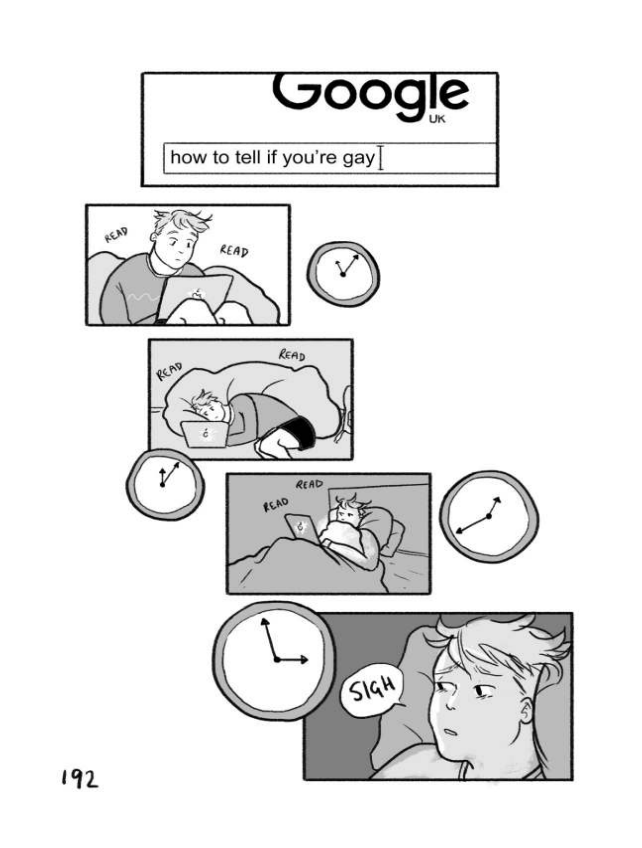
Analysis also demonstrated that the anticipated nature of challenges to a book significantly shaped the tone of each rationale. The Heartstopper, Volume 1, rationale adopted calm, explanatory language designed to normalize LGBTQ+ representation without defensiveness. Emphasis on emotional authenticity, adolescent relatability, and the text’s gentle narrative arc allowed the rationale to address potential concerns while maintaining an affirming and instructional focus. Specific panels highlight key aspects of adolescent exploration into queer identity that many relate to as they explore their own identities (Oseman 192).
In contrast, the rationale for This Book Won’t Burn required a more direct and assertive tone. Because the novel explicitly depicts harassment, violence, and political conflict related to censorship, the rationale contextualizes these elements as reflective of real-world dynamics students encounter. Discomfort was framed as a catalyst for inquiry rather than a rationale for removal. This contrast underscores that effective rationales are not formulaic; instead, they must be rhetorically responsive to the specific contexts in which texts are challenged.
Ethics and Responsibility
Project logs and reflections revealed the emotional labor inherent in rationale writing, particularly when engaging with topics such as bullying, Islamophobia, and queer identity. This emotional labor parallels findings in school librarianship research. In their statewide study, Tudor et al. emphasize that self-censorship often has more severe consequences than overt challenges because “a discussion about the book never occurs,” meaning students are denied access without any opportunity for debate or defense (3). Developing these rationales required balancing empathy for student experiences with an awareness of adult gatekeepers who often control access to texts. The process highlighted that advocacy writing is not merely technical but deeply ethical, requiring care for how harm, identity, and vulnerability are represented.
At the same time, the work reinforced the role of rationales as acts of professional solidarity. Articulating why these books matter, especially for students from marginalized communities, transformed the writing process into a form of ethical commitment. Rationale writing became not only a means of defense but also an expression of responsibility to students’ intellectual and emotional well-being. Dobbs et al. similarly emphasize that effective responses to censorship require emotional preparedness alongside pedagogical clarity. They argue that courage in the face of censorship is not spontaneous but cultivated through preparation, shared language, and professional community support (24-25). The rationale-writing process documented in this study reflects that preparation, offering educators a structured way to respond with confidence rather than fear.
Information Access
Finally, the analysis revealed the importance of accessibility and intentional multi-audience design. Both rationales were written with educators, librarians, administrators, and families in mind, extending their usefulness beyond formal review or challenge procedures. Policy scholarship also stresses that institutional preparedness matters. Solon et al. argue that libraries must develop clear reconsideration policies before censorship crises occur, because proactive procedural infrastructure strengthens an institution’s ability to resist suppression efforts rather than reacting after removals have already taken place (2). The inclusion of teaching strategies, alternative text options, and discussion scaffolds allowed the rationales to function as proactive resources rather than reactive justifications. This design choice emerged as a best practice, increasing the likelihood that rationales would be used to support inclusive instruction and informed dialogue before challenges escalate. Jerasa et al. stress that equitable book access depends not only on the presence of diverse texts but on sustained advocacy infrastructures that allow educators to justify and maintain those texts over time (71). Formal book rationales, as demonstrated in this project, function as one such infrastructure by translating values of access and equity into institutionally legible documentation.
Recommendations
Based on the insights of this study, I find several recommendations for educators, librarians, and advocates engaged in defending access to challenged literature. First, rationale writing should be recognized and treated as a form of professional scholarship rather than as an ad hoc response to controversy. Coleman’s analysis of policy preparedness reinforces this recommendation, arguing that educators who rely solely on values-based defenses are often disadvantaged in formal review processes, whereas those equipped with documented rationales and procedural fluency are better positioned to sustain access (268). Even in times when there may not be as many calls for book bans, the use of rationales as developed documents that allow educators and librarians to utilize a text in an academic setting can be helpful to answer guardian concerns and flesh out a curriculum. Effective rationales benefit from collaborative development, thoughtful revision, and long-term preservation as living documents that can be adapted to evolving educational contexts. When institutions support rationale writing as an ongoing professional practice, educators are better positioned to respond confidently and consistently to challenges that have become recurring trends.
Second, rationales are most effective when they lead with pedagogy rather than defense. This recommendation aligns with academic library research on censorship preparedness. Solon et al. emphasize that reconsideration policies and documented review procedures serve as safeguards against arbitrary removal, allowing institutions to respond consistently rather than yielding to political pressure or public scrutiny (2). Centering instructional purpose, curricular standards, and student learning outcomes reframes debates about challenged texts around educational value rather than ideological disagreement. By foregrounding how a text supports literacy development, critical thinking, and classroom engagement, rationales shift the focus from whether a book is controversial to whether it serves legitimate educational goals.
Additionally, successful rationales anticipate potential challenges without conceding the legitimacy of censorship. School library research further suggests that anticipatory work is especially urgent around LGBTQIA+ texts. Tudor et al. found these books were the least likely to appear in collections, even compared to titles containing profanity or drug use, demonstrating how identity-based censorship often operates through preemptive exclusion (7). Transparently acknowledging concerns related to content, language, or themes can strengthen a rationale’s credibility, provided these concerns are addressed through evidence-based reasoning and professional judgment. This approach allows educators to engage constructively with stakeholders while maintaining a clear stance in support of intellectual freedom.
The study also suggests that rationales should be intentionally designed for reuse and adaptation across multiple contexts. Including teaching approaches, discussion strategies, and alternative text options extends the usefulness of rationales beyond formal review processes, enabling them to support classroom instruction, library programming, and family conversations about literature. With the rationale database being on a national scale, the rationales can contribute to curricula across states, even with varying state standards, as that section of the rationale can be used across the country to defend a text. Such flexibility increases the likelihood that rationales will be used proactively rather than only in moments of conflict.
Finally, institutions must recognize rationale writing as a form of advocacy labor that involves significant emotional and intellectual investment. Defending challenged texts often places educators and librarians in vulnerable positions, requiring them to navigate conflict while upholding professional and ethical commitments that may conflict. Providing institutional support through mentorship, collaborative review, and administrative backing ensures that individuals are not left to shoulder this responsibility alone and reinforces a collective commitment to students’ rights to read and learn from diverse literature.
Conclusion
This project reshaped my understanding of advocacy. I entered the research with a belief in the importance of inclusive literature, but I leave it with a deeper appreciation for the practical tools that sustain that belief in contested spaces. Writing these rationales taught me that advocacy does not always look like protest. Sometimes it looks like careful alignment, thoughtful language, and patient explanation.
Crafting rationales required me to listen to students’ needs, to educators’ constraints, and to the fears that often drive censorship. It also affirmed that one well-supported document can make the difference between a book being removed and a student finding themselves reflected in a story. As book challenges continue to rise, this work offers a model for how educators and advocates can respond with clarity, compassion, and confidence. Defending the right to read is not abstract. It is enacted in syllabi, library shelves, and rationales written with care. I hope this study encourages others to take up that work in their own communities.
Works Cited
Ahmed, Samira. This Book Won’t Burn. First edition. Little, Brown and Company, 2024.
“ALA Statement on Book Censorship.” American Library Association, 29 Nov. 2021, https://www.ala.org/advocacy/statement-regarding-censorship.
Coleman, James Joshua. “Being Policy-Prepared When Books Are Banned.” Language Arts [Urbana], vol. 102, no. 5, 2025, pp. 267–69.
Dobbs, Christina L, et al. “‘Lots of Ways to Be Brave’: A Teacher’s Guide to Facing Censorship.” English Journal [Urbana], High school edition, vol. 113, no. 3, 2024, pp. 22–28, https://doi.org/10.58680/ej2024113322.
Foust, Remington. “NCTE Book Rationale for Heartstopper, Volume 1 by Alice Oseman,” National Council of Teachers of English, forthcoming in 2026, https://ncte.org/blog/rationale/heartstopper-vol-i/.
Foust, Remington. “NCTE Book Rationale for This Book Won’t Burn by Samira Ahmed,” National Council of Teachers of English, forthcoming in 2026.
Foust, Remington. “NCTE Book Rationale for Wicked: The Life and Times of the Wicked Witch of the West by Gregory Maguire,” National Council of Teachers of English, forthcoming in 2026.
“Freedom to Teach: Statement against Banning Books.” National Council of Teachers of English, https://ncte.org/freedom-teach-banning-books/.
Jerasa, Sarah, et al. “Examining Our Roles of Literacy Sponsorship for Students’ Equitable Book Access.” English Journal [Urbana], High school edition, vol. 113, no. 3, 2024, pp. 65–72, https://doi.org/10.58680/ej2024113365.
Maguire, Gregory. Wicked:The Life and Times of the Wicked Witch of the West. ReganBooks, 1995.
Moore, Jennifer, and Alissa Tudor. “To Add or Not to Add: An Examination of Self‐Censoring Behaviors among School Librarians.” School Library Research [Chicago], vol. 27, 2024.
Oseman, Alice. Heartstopper. Volume 1. Graphix, 2020.
Rabalais, Caroline B. “Possibilities of Young Adult Literature: Opportunities and Challenges of Critical Literacy Amidst Book Banning.” Journal of Adolescent & Adult Literacy, 2025, https://doi.org/10.1002/jaal.70008.
Solon, Blair, et al. “Preparing for the Worst but Hoping for the Best: Censorship, Academic Libraries, and Reconsideration Policies.” Library Resources and Technical Services [CHICAGO], vol. 69, no. 2, no. 8439, 2025, https://doi.org/10.5860/lrts.69n2.8439.
Suico, Terri. “A Review of Defending Frequently Challenged Young Adult Books, Teaching Banned Books, and Books Under Fire.” Study and Scrutiny, vol. 6, no. 1, 2023, pp. 197–204, https://doi.org/10.15763/issn.2376-5275.2023.6.1.197-204.
Tudor, Alissa, et al. “Silence in the Stacks: An Exploration of Self-Censorship in High School Libraries.” School Libraries Worldwide, vol. 28, no. 1, 2023, p. 1, https://doi.org/10.29173/slw8555.
Learn more about the author on our 2026 Contributors page.